From a printed carton to a book or baking liner, the finished product determines the paper specification. Explore the materials below and bring us your dimensions, process and sample reference.Discuss your application →
01
Packaging & printing
Retail cartons, rigid gift boxes, book covers and paper bags.
A folding carton needs board that prints and creases cleanly. A rigid box needs a structural core plus a wrap. Start with the box construction so these different materials can be specified together.
Rigid box or folding carton?
For rigid boxes, compare the structural board and wrap as separate materials. For folding cartons, compare grammage, stiffness and the crease on the finished carton.
Paper cups, takeaway containers, food wraps and baking liners.
Choose the paper around its contact with the food. A dry bakery wrap, a hot drink cup and an oven liner need different barrier and forming properties. Confirm the exact grade against the intended use before sampling.
Wrap, cup or oven liner?
Choose grease resistance for wrapping, coated construction and sealing for cups, or documented release and temperature conditions for baking. Specify the exact use before requesting compliance documents.
Cosmetics boxes, jewellery packs, fragrance cartons and presentation inserts.
Build the pack from the inside out: structural board for the box, then a surface paper for the colour and feel. Compare physical samples after the planned foil, embossing or printing process, rather than selecting from a screen alone.
Structure or decorative finish?
Set the board thickness first, then compare the wrap colour and texture after the planned foil or embossing trial. Approve coordinated physical samples for the box, insert and tag.
Books, notebooks, catalogues, brochures, covers and business forms.
Select text stock and cover stock separately. Page opacity, paper bulk and grammage affect the finished book; coating and surface affect image reproduction. Match sheet or reel format to the press and binding route.
Text pages or image-led pages?
Compare uncoated Woodfree Offset Paper for text and writing with coated Art Paper for image reproduction. Check book weight, opacity, binding and cover stock separately.
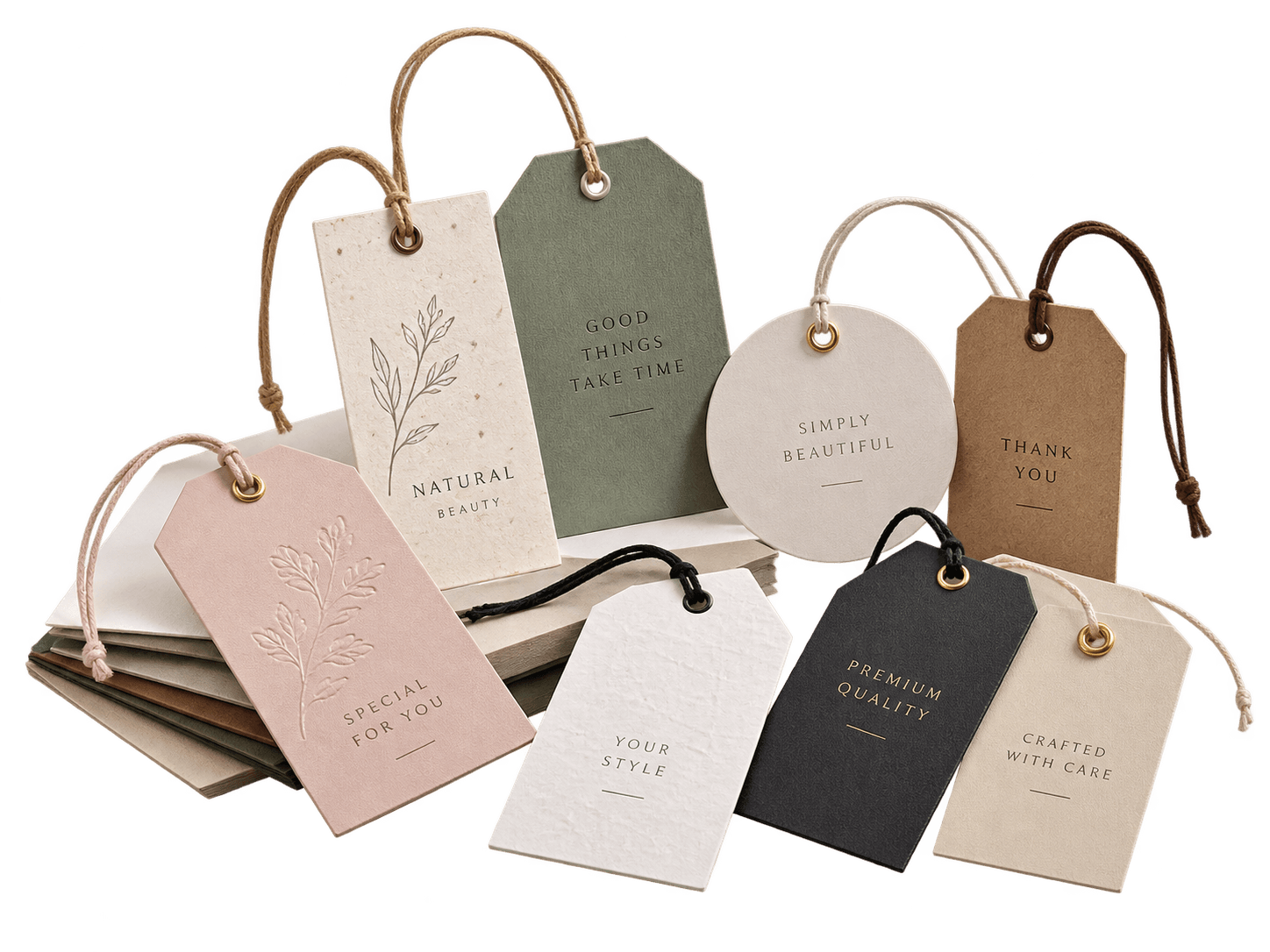
Apparel tags, jewellery cards, bottle-neck tags and printed product labels.
Small pieces still need a complete specification. Check fine text and barcode printing, stiffness, punched holes and exposed cut edges. For adhesive labels, confirm the face paper, adhesive and release construction separately.
Hang tag or adhesive label?
For tags, check stiffness, cut edges and punched holes. For adhesive labels, define the face paper, adhesive and release liner; a face-paper choice alone does not specify the complete label.
Retail bags, gift wraps, invitation cards, liners and seasonal collections.
Use a different paper weight for each component: flexible stock for wrapping, stronger grades for bags and card for tags or invitations. Keep the palette consistent by comparing the actual swatches together.
Wrap, bag or card?
Compare flexibility for wraps, strength for bags and body for cards. Confirm the colour palette using the actual grades together, since weight and surface can change their appearance.
Send a drawing, material reference or current specification with your enquiry. Agree the paper grade and working format, then test the sample through your printing, converting or packing process before placing the order.