
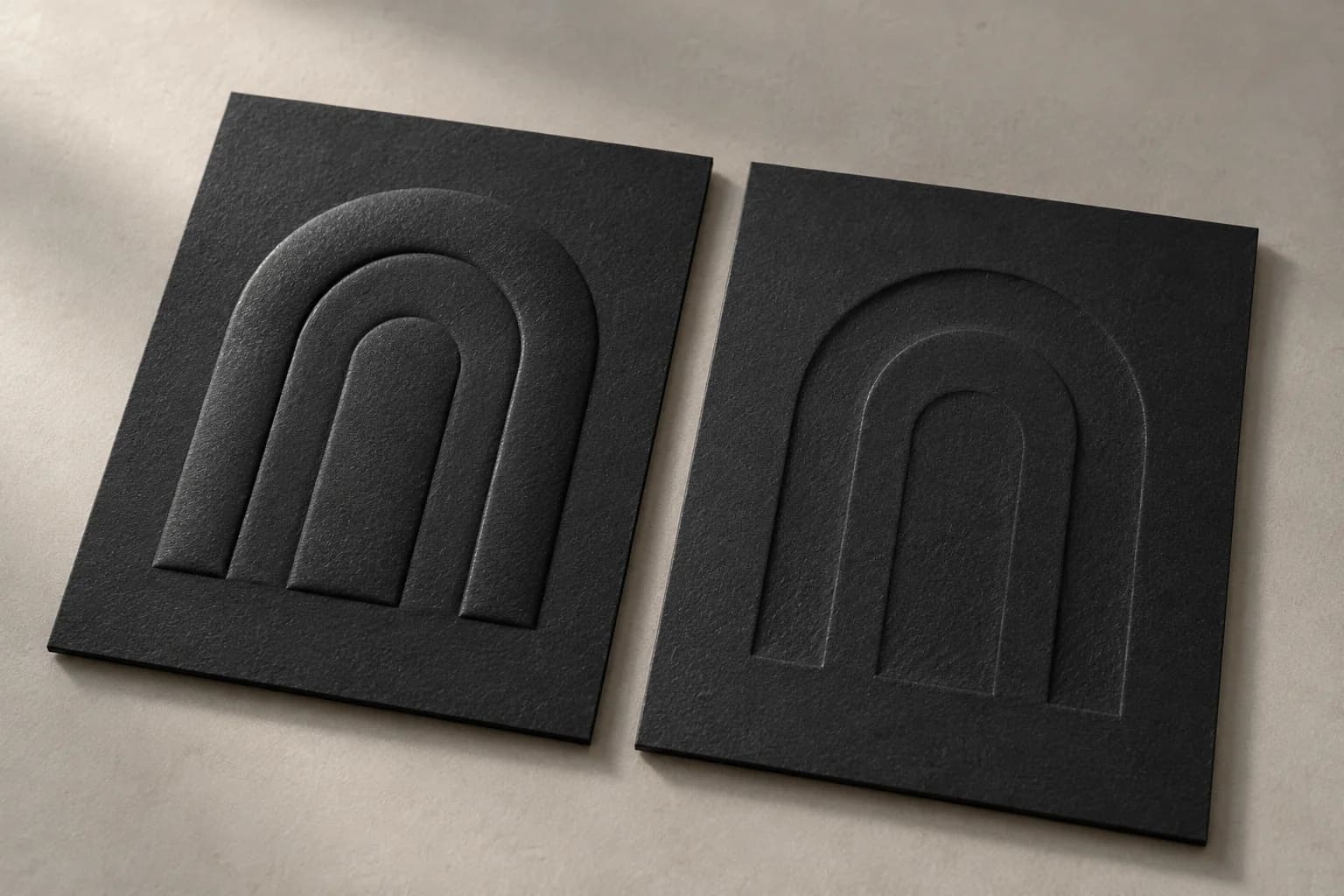
Turn the sample over before approving the relief
When ordering black paper for printing with an embossed feature, approve the reverse face as part of the finished design. A raised motif on the front can leave an impression on the back, where it may intersect printed information or remain visible when a card is lifted. A front-only photograph leaves that purchasing decision unresolved.
This guide concerns black cards and printed panels with an additional embossing operation. It does not specify a die, press setting or universal depth. The YOUNGSUN Black Paper / Black Card range includes materials for premium finishing, with embossing suitability subject to grade testing. Confirm the selected substrate and the converter responsible for the finished component.
Distinguish the two faces in the brief
Give the faces clear names before circulating artwork: outward-facing front, printed reverse, or inside face after assembly. Mark how the customer handles the item. A loose presentation card exposes different surfaces from a panel permanently mounted within packaging.
360 Press Solutions’ embossing guidance explains that embossing leaves a reversed impression on the back and can affect content printed there. Use that observation to ask a specific question: which reverse areas must remain suitable for their intended message? It does not establish a numerical acceptance limit for your material.
Keep the drawing for the relief separate from the printed artwork, while showing their intended relationship. Identify the front and back versions together so that a changed logo position cannot leave an outdated reverse file in the approval pack.
Decide whether the reverse pattern belongs in the design
SunDance’s Embossing Cheat Sheet explicitly recommends considering whether to conceal the reverse pattern or incorporate it into the design. That is a project decision, not a promise that any construction will hide it.
For a component viewed from both sides, ask the designer to account for the reverse relief in the layout. For a proposed covered or mounted component, have the converter identify the construction and provide the relevant assembled sample. Do not approve a concealed back from an image of a loose front panel. Any extra covering or assembly changes the scope of the job and needs its own material and process review.
Compare the reverse artwork with the actual impression
Our suggested buying check is a two-face comparison using the intended artwork and nominated stock:
- Locate the embossed feature on the front, then identify its corresponding area on the reverse.
- Read any reverse-side text that overlaps or sits beside that area.
- Inspect the unprinted surface around the impression as well as the printed areas.
- View the card in its intended orientation and, where relevant, after assembly.
Use an agreed physical reference and viewing conditions. A decorative sample with no back printing cannot approve legibility on a different two-sided design. A blank-stock trial and a printed, embossed component answer different questions; state which one you have received.
Keep print approval and finishing approval connected
If the black design also uses white lettering or a white colour base, refer to our existing white-layer artwork guide. That approval concerns ink or toner placement. It does not by itself approve the reverse appearance produced by embossing.
Ask the converter to record the proposed production sequence and which operations the sample represents. If a later sample changes the paper grade, artwork position or finishing route, review the affected faces again. Do not assume that through-dyed colour, a familiar grammage or a previous print sample guarantees the same relief result.
Retain one identified reference showing both faces
Archive the approved artwork versions with front and reverse photographs and the physical sample identification. Record whether the reverse impression is intentionally visible, covered in the agreed construction, or still awaiting a revised sample. Avoid an unqualified “approved” note when only the front was inspected.
For a material enquiry, send the proposed application, grade reference, surface, sheet format, quantity and destination through our contact page. Share the converter’s requirements separately from the visual approval. Explore the packaging-board family if the construction is still being selected; finished printing and embossing services must be confirmed independently.
Buyer questions
Does a good front emboss approve the reverse automatically?
No. Inspect the reverse impression, its relationship to printed content and its visibility in the intended use. Record approval for both faces.
Will black colour alone conceal the reverse impression?
Do not assume it will. Review the nominated stock and finished construction under agreed viewing conditions with a representative sample.
Can an earlier white-ink proof approve a later embossing operation?
It approves only the features and processes it represents. Request a sample covering the intended embossing and inspect both faces before approving that additional operation.