
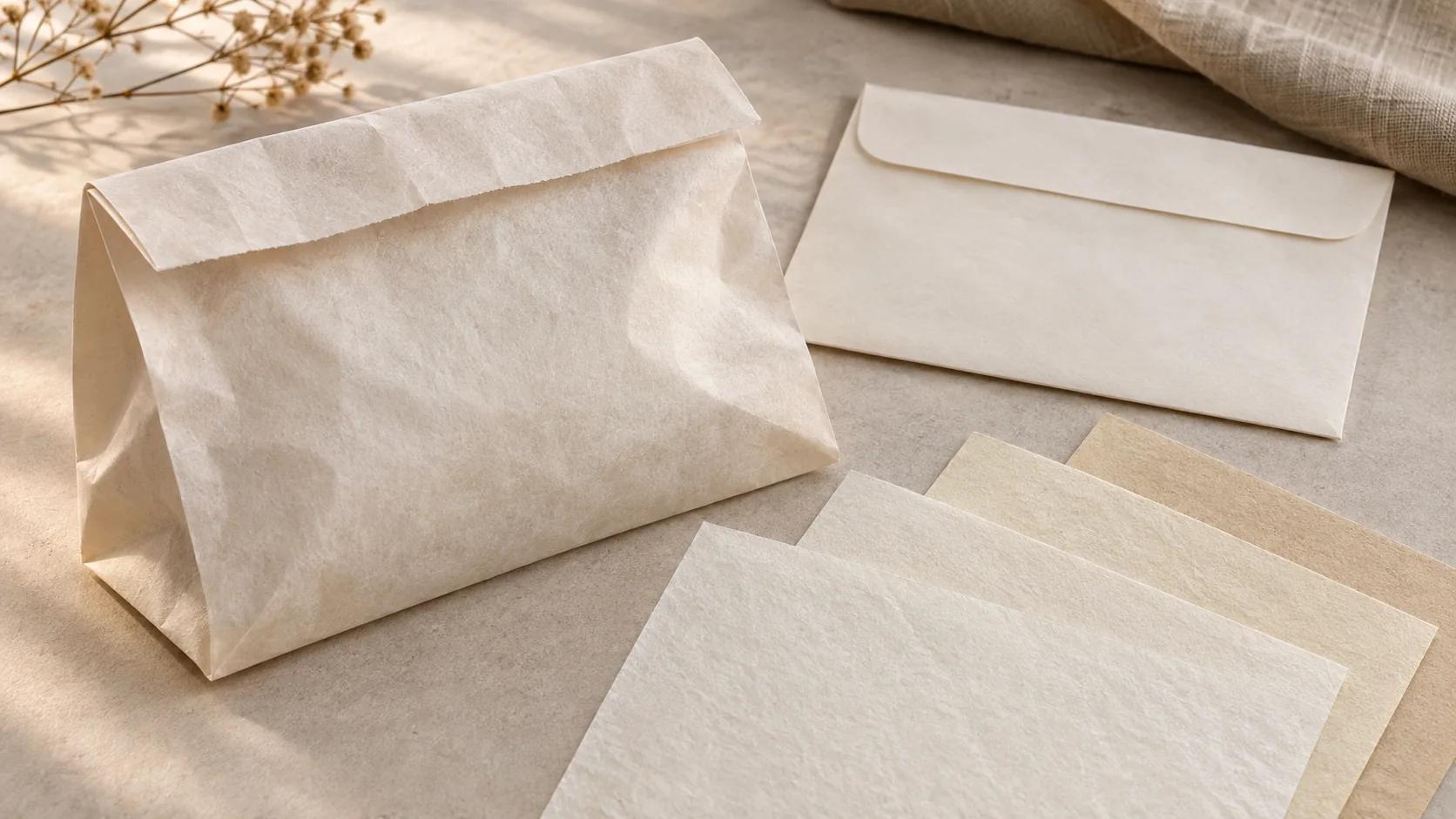
When buying baking paper for a food-contact wrapper or pouch intended for the EU market, ask what the PFAS evidence actually covers. Start with the finished packaging specification. A report on an unconverted sheet may be useful, but printing, a coating, or a seal can change the construction that needs to be assessed. A sheet sold for use as a tray liner also needs its own scope review before anyone treats it as packaging.
Read the three limits separately
Article 5(5) of the EU Packaging and Packaging Waste Regulation applies to food-contact packaging placed on the market from 12 August 2026. It sets limits of 25 ppb for an individual targeted PFAS and 250 ppb for the targeted sum, with precursor degradation where applicable to the sum. Both targeted limits exclude polymeric PFAS from quantification. The third limit is 50 ppm for PFAS including polymeric PFAS. Concentrations at or above the applicable limits are covered by the prohibition, subject to the provision's treatment of prohibitions under other Union acts. Regulation (EU) 2025/40, Article 5.
If total fluorine exceeds 50 mg/kg, the regulation calls for evidence on request to distinguish how much fluorine comes from PFAS and how much from other sources. Total fluorine by itself does not identify the PFAS content. Article 5(6) places the demonstration of conformity in the Annex VII technical documentation. The Commission's guidance also distinguishes first placement on the EU market from the date a package was manufactured. If a supplier relies on earlier market placement, ask for evidence of that event. Commission guidance C/2026/3084.
Match the test sample to the purchase specification
Record the paper grade, coating and print specification, sealing materials, finished article reference and revision. Identify the tested sample by batch or another traceable identifier. If the evidence was collected on separate materials, ask the responsible party to explain how those records support its assessment of the finished construction. A sample described simply as “white paper” is hard to connect to a printed pouch with a revised coating.
Document the actual food-contact use separately, including the contact surface and intended conditions. A PFAS review does not answer all food-contact questions. Use the baking and oven paper product page for material selection and ask for the documentation that applies to your precise grade and intended use.
Read past “not detected”
Ask the laboratory or supplier which analytes were covered, how the sum was determined, whether precursor treatment was relevant and what the reporting or quantification limits were. A hypothetical “not detected” entry with a reporting limit of 40 ppb would not establish that the substance was below 25 ppb. Ask explicitly which evidence addresses polymeric PFAS, because a targeted list alone leaves that part of the review open.
A declaration about intentionally added PFAS is useful for understanding a formulation. Check its issuer, material reference, date and scope, then compare it with the analytical evidence and outstanding questions. Treat gaps as items for review before accepting the documentation. Use the previous guide to technical files and declarations to record those gaps against the exact packaging revision.
Can a declaration of no intentionally added PFAS close the review?
It can support the review of ingredients, but it does not quantify PFAS in the actual package. Ask how the responsible party supports each applicable limit and links the evidence to the supplied construction.
Does a total fluorine result establish the PFAS concentration?
Total fluorine measures fluorine from different sources. Ask how the result is interpreted alongside targeted and polymeric PFAS evidence and how any applicable request for attribution is addressed.
When should we revisit the evidence?
Revisit the scope when the paper grade, coating, printing or seal changes. Ask the responsible party to document whether the earlier evidence still covers the new specification.