
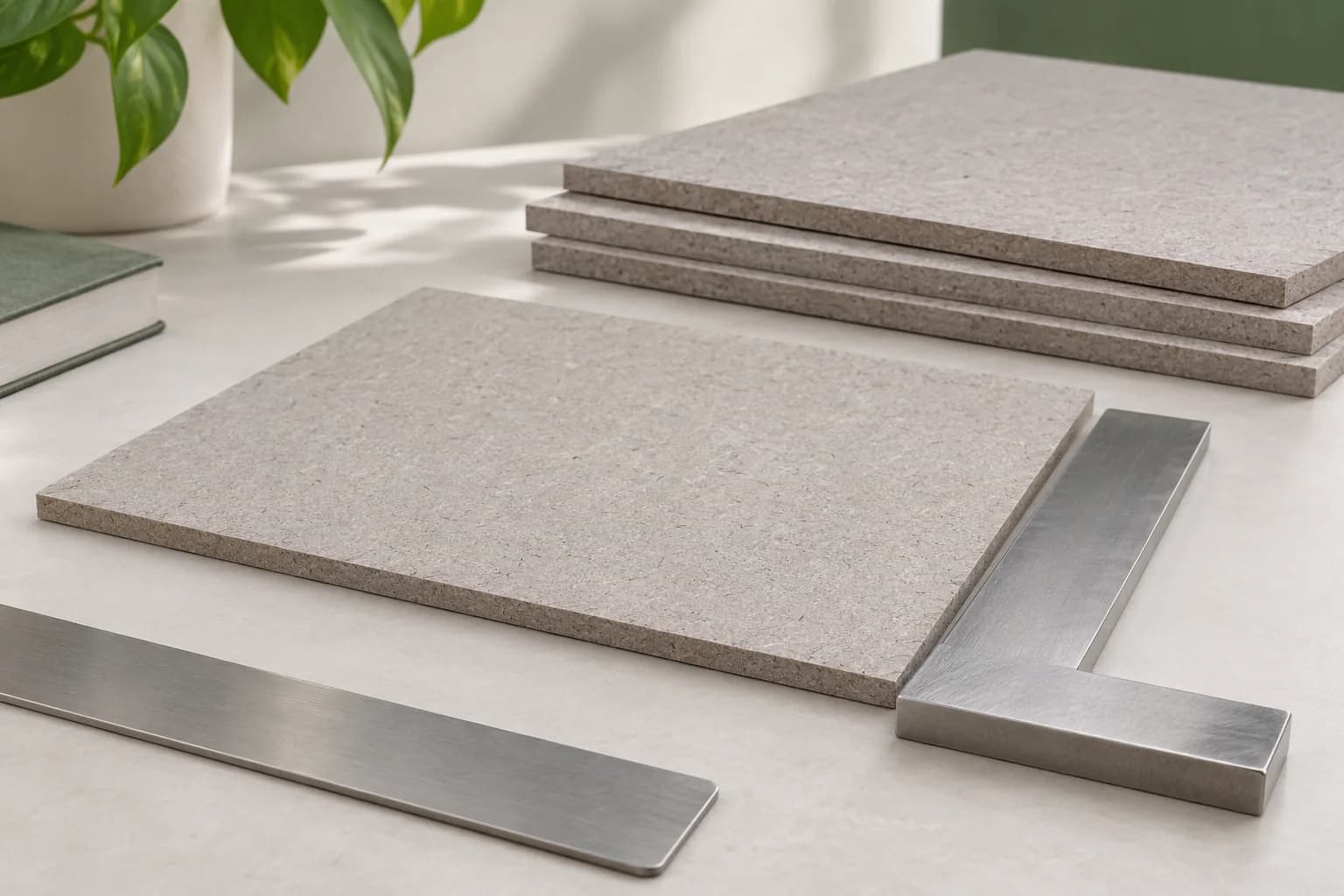
A grey board quote can state a sheet size without defining the geometry of the cut component you need. Before buying cut panels for covers, box components or backing pieces, identify what is being supplied, then agree length, width and squareness as separate acceptance items.
This is a purchasing checklist for discussion with your supplier and converter. It does not set a universal cutting tolerance, prescribe a laboratory method or certify a finished structure.
First identify the supplied component
Start with the drawing, not just two numbers in an email. State whether the quotation covers a parent sheet that you will trim, a finished cut greyboard core, or a component with facing paper already attached. A finished faced panel and its bare core can require different dimensions. Name the component and drawing revision so that the supplier is quoting the same object that your assembly team expects.
For a rectangular panel, show the units and identify which edge each dimension follows. If one edge will locate the panel in your next operation, mark that reference edge on the drawing. Where the converter requires a grain direction, identify it separately rather than assuming that a length-by-width notation communicates it.
Holmen's technical information lists sheet width, length and squareness separately and explains grain direction for its own board families. Those specifications are not YoungSun greyboard tolerances.
Separate size from squareness
A panel may need checks beyond the two nominal dimensions. Write down the permitted variation for each required characteristic and how the parties will assess it. “Cut to size” alone leaves too much room for different interpretations of the acceptance decision.
BRANOpac's March 2019 delivery conditions also distinguish dimensions from angularity in sheet-form paper and board. Its figures concern its own contracts; they are not default limits for another supplier or a small finished component.
Ask your converter which dimensional and squareness requirements the actual construction needs. Do not copy a mill's parent-sheet tolerance into a finished-panel purchase order simply because both materials are called paperboard. Confirm feasibility for the selected grade, thickness, component size and cutting operation before treating a requested limit as accepted.
Make the inspection record unambiguous
The following is a proposed order-discussion record, not a standard test procedure. Agree the checking method, reference and acceptance rules with the responsible supplier or converter before ordering.
- Supplied part: Bare core, parent sheet or faced component. Retain: Drawing and revision.
- Dimensions: Units, reference edges and required length/width. Retain: Agreed limits and measurement locations.
- Squareness: The characteristic and checking method used. Retain: Agreed reference and acceptance limit.
- Material: Grade, thickness and structure. Retain: Relevant specification and sample ID.
- Traceability: Component code, order and pack or lot reference. Retain: Inspection record linked to the delivered material.
If the parties propose comparing diagonals, specify the corner references and how that comparison will be interpreted. Do not present a diagonal comparison on its own as proof of every edge or dimensional requirement. If an engineer's square or another reference is used, agree the setup and what is being checked. A photograph of a ruler beside a panel does not establish a measured result.
Record observations against the agreed requirement. Keep a difference in length or width separate from an angularity observation; otherwise a single “size passed” note can hide which characteristic was actually examined. Ask how samples will be selected and how a disputed result will be reviewed, rather than inventing a universal number of panels to inspect.
Approve the cut component before scaling the order
Compare a representative cut component with the current drawing and the next operation. A cover core, a box side and an insert should each be identified by their own part reference. If fit in an assembly is important, have the converter assess the intended construction; a loose sheet does not approve the completed assembly.
Retain the agreed drawing, specification, sample identity and acceptance record together. Reconfirm affected requirements when the drawing, panel size, board construction or cutting process changes. An earlier approval should not silently become approval of a different component.
YoungSun grey board is offered for structural applications, with custom cutting subject to the material and processing requirements. Send the required grade, thickness, component drawing, quantity and destination for confirmation. A general product description is not an order-specific cutting guarantee.
For a quotation, send your specification with the distinction between requested and accepted tolerances clearly marked. The packaging-board range provides material context; the finished cut-panel requirements belong in the project record.
Buyer questions
Does a nominal sheet size define squareness?
No. Identify the required dimensions and squareness separately, with an agreed checking method and acceptance limits for the supplied component.
Can a published mill tolerance be used for any cut greyboard panel?
No. Check its product and supply scope, then obtain agreement for your selected grade, component and cutting operation. Another manufacturer's figures are not YoungSun guarantees.
How many panels should be inspected?
This guide sets no universal sample quantity. Agree sample selection, acceptance and dispute-review arrangements with the responsible supplier or converter.