
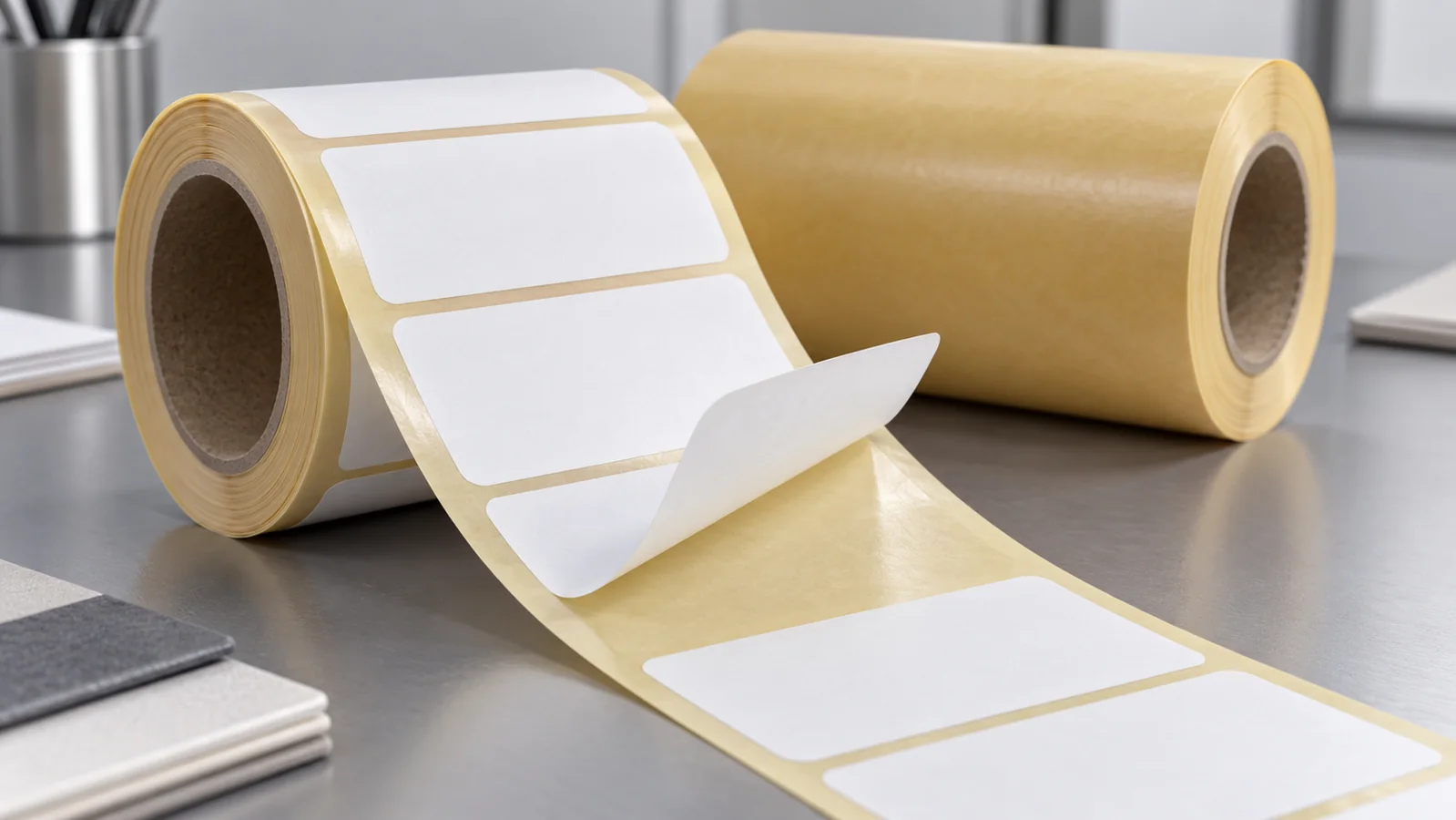
Choose glassine paper as part of the label construction
For self-adhesive label backing, select glassine paper by its role in the finished release-liner system. Start by confirming whether the quotation covers base paper for silicone coating or an already treated liner. Then assess the proposed grade with the actual adhesive, label facestock and converting process. A smooth-looking sheet alone does not establish the release performance of the finished label.
YOUNGSUN's glassine product is positioned for self-adhesive label backing and release-liner base applications. This guide addresses that use, rather than food wrapping or transparent packaging windows. The focus is approving the correct backing construction for your label process.
Base paper and release coating answer different questions
UPM's official glassine overview identifies glassine as a release-liner material for pressure-sensitive labels. Its description of surface properties provides useful industry context; UPM's proprietary technologies and performance claims do not describe YOUNGSUN grades.
Elkem's label release-coating guidance explains the role of silicone coatings in protecting the adhesive and enabling label converting and application. The buying implication is to specify the complete system rather than treating smooth paper as proof of easy release. Use those references to define questions for your converter and coating supplier.
In a peel operation, the label separates from the release surface. The glassine backing should not be described as paper layers splitting apart. Keep that distinction in sample reports so an intended release action is not confused with material damage.
First establish what the supplier will deliver
A request for “glassine liner” can leave the coating status unclear. Ask the supplier to state the exact grade and whether the proposal is uncoated release base paper or a finished treated liner. If coating is performed by another party, name that party's role in approval; do not assume the paper supplier guarantees the completed adhesive construction.
Review the glassine paper product page and grade-specific documents when preparing the enquiry. Published ranges describe documented options, not automatic availability of every intermediate grammage. Confirm the selected colour, grammage, caliper and supply format for the order.
Build a comparison around your converting route
Send the converter enough information to compare candidates under agreed conditions:
- Label construction: facestock, adhesive reference, label dimensions and intended application.
- Paper identity: grade reference, colour, grammage, caliper and the supplier's stated tolerances or test methods.
- Coating route: coating status, proposed silicone system and the party responsible for reviewing suitability.
- Reel requirements: width, core, outer diameter, winding direction and handling requirements agreed for the equipment.
- Process conditions: coating, die cutting, waste-matrix removal and manual or automatic label application as applicable.
Do not transfer the settings from one material to another without review. This list is an RFQ framework, not a claim that every YOUNGSUN grade suits every line or silicone formulation.
Approve the converted sample, not just the loose sheet
A base-paper sample can help review material identity and surface appearance. Final approval needs the relevant converted label construction. Arrange a representative trial with the converter and agree what evidence will support acceptance.
For the trial record, include the paper and coating references, adhesive and facestock, evaluation method and conditions, and observed release behaviour. If release force is measured, retain the method, units and test conditions alongside the result. Comparing bare numbers without that context can lead to an incorrect material decision.
Observe label dispensing, liner integrity during the agreed die-cutting and waste-removal process, and the condition of the adhesive after release. Ask the converter to investigate where a failure occurs before deciding that changing grammage is the solution. The guide sets no universal peel-force limit, line speed or test threshold.
Keep the approved construction traceable
Separate the base-paper approval from coating and label-system approval in your purchase record. Keep approved samples and their references linked to the order specification. A change to paper grade, coating, adhesive, facestock or process conditions should prompt a review of whether the existing approval still applies.
For a useful quotation, provide your current backing reference, supply form, label construction, converting route, quantity and delivery market. Explore printing and culture paper, our application information, or send requirements to the sourcing team. Coating status, suitability and commercial conditions must be confirmed for the proposed order.
Frequently asked questions
Is glassine base paper the same as a silicone-coated release liner?
No. Confirm the supplied coating status. Base paper and a finished treated liner are different purchasing stages, and the completed label construction needs its own approval.
Does a smooth surface guarantee easy label release?
No. Smoothness alone does not establish release performance. Review the coating, adhesive and relevant converting and application conditions together.
Should I select label backing by grammage alone?
No. Specify the exact grade, caliper, coating status and supply format, then review a representative converted sample under agreed conditions.