
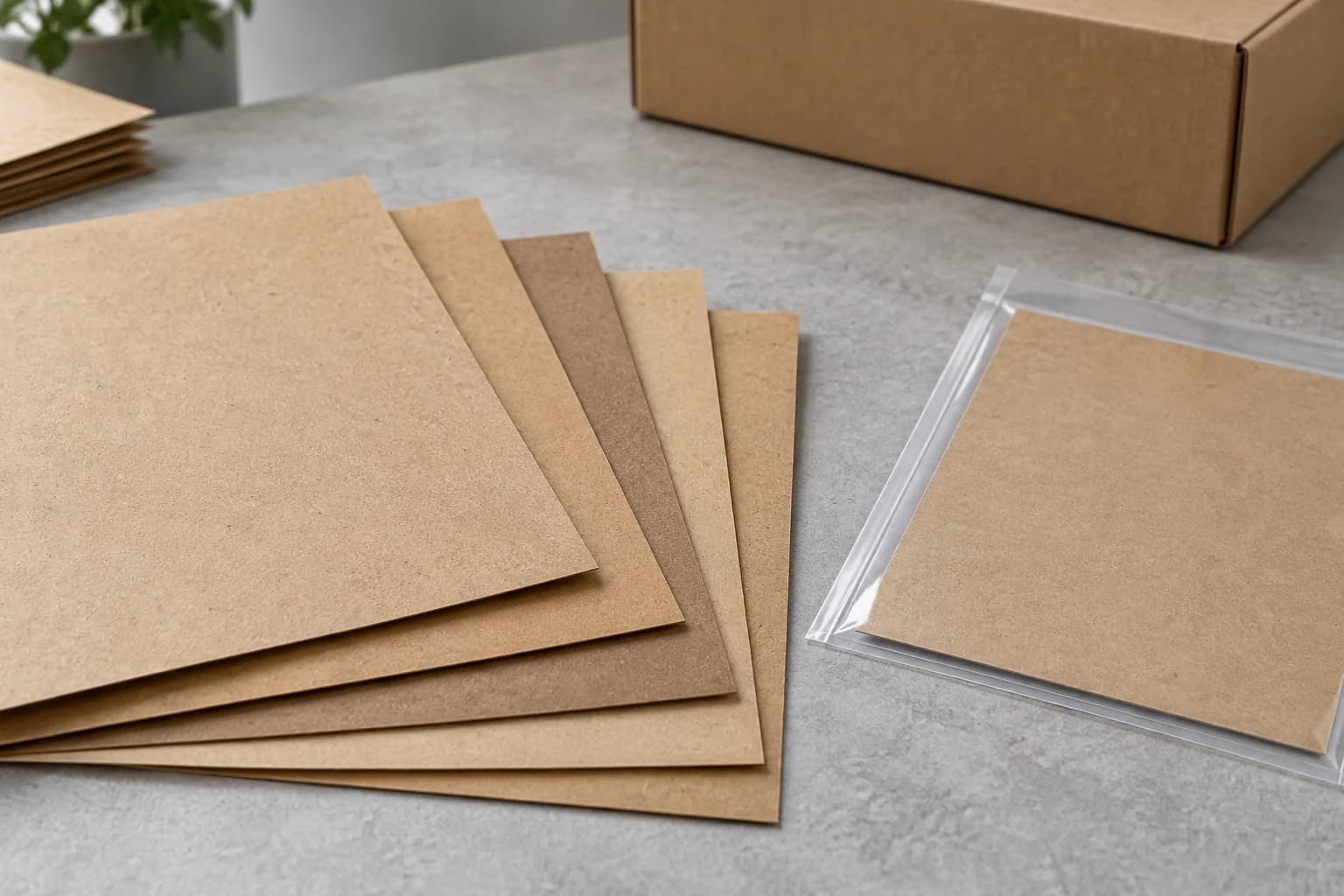
Make the next order point to the same physical reference
For a repeat brown kraft paper order, retain an identified physical reference and agree how the supplier will compare the proposed material with it. A photograph can explain a concern, but it should not silently become the sole colour approval. Put the reference identity, paper grade, viewing arrangement and approval decision in the order record.
This guide is for packaging buyers and paper distributors who want the next delivery to be assessed against the same agreed expectation. It addresses shade approval, not the price scope covered in our kraft roll quotation guide. Start material enquiries with the brown kraft paper and card range, then confirm the selected grade and application.
Decide what the reference actually represents
An old finished bag, a loose sheet from a sample book and a retained production sheet may all be described as “the approved brown.” They do not automatically represent the same acceptance basis. Before requesting a match, identify which object was approved and what it is meant to control.
Our suggested record includes the supplier's material reference, the relevant order or sample reference, the approval date, the approver and the face intended to be seen. Record grammage and format as part of the material identity, without assuming that those details define colour. If the sheet has printing, a coating or another finish, say whether approval concerns the raw paper or that finished construction.
Do not let a handwritten “same as before” replace this information. The supplier needs a reference it can identify, and the buyer needs a record that survives a change of colleague, distributor or converter. Where the sample's origin is unknown, treat it as a target for investigation rather than a confirmed production standard.
Compare under an agreed viewing arrangement
HunterLab's explanation of metamerism describes samples that match under one lighting condition but differ under another. This is a reason to agree how colour will be viewed; it is not proof that any particular kraft shipment has this problem.
For purchasing, ask the supplier and converter to define a consistent comparison arrangement. Identify the lighting used for approval and any end-use lighting that matters to the customer. Keep the reference and candidate together during the comparison, and record which side is being assessed. Ask the responsible colour specialist to define appropriate presentation conditions when a formal assessment is needed.
A picture sent from one warehouse and viewed on another person's screen does not document the same physical viewing arrangement. Use photographs to identify samples, show where a concern occurs and communicate observations. Keep the physical comparison and its written decision as the approval basis agreed by the parties.
Ask what a measurement report would mean
Konica Minolta's pulp and paper guidance discusses colour alongside optical properties such as opacity and brightness. A brown appearance should therefore not be treated as a complete material specification. The guide explains measurement applications; it does not establish that YOUNGSUN has measured the proposed order.
If instrumental colour data are part of the purchase requirement, agree the method, reporting conditions, reference and acceptance criteria with the supplier before ordering. Request a report that identifies the material and comparison basis. A number without its method or reference is difficult to use when two parties disagree.
This article sets no universal colour-difference tolerance and promises no identical shade across every production run. If the buyer needs a defined acceptance limit, that limit requires agreement for the actual grade and use. Do not infer the availability of a particular test or instrument from a general product photograph.
Separate the paper approval from the finished pack
The natural-brown surface is part of the appearance of the YOUNGSUN kraft family. A buyer should still identify whether the required reference is an unprinted sheet or a converted pack. An accepted paper sample does not record the result of every later printing and finishing operation.
Our recommendation is to retain both references when the project needs them: the agreed paper reference for material comparison, and an approved finished sample for the actual pack. Ask the converter to document which material and process produced the finished sample. Review changes to the paper, artwork or finish before treating an earlier approval as applicable.
Keep visual acceptance separate from strength, assembly and application checks. A shade comparison is not a bag-load test, a food-contact approval or proof of fibre composition. Our packaging material category and application overview can help describe the project, but the order specification must identify its own requirements.
Keep the reference usable and traceable
A practical reference system needs an owner, a location and a version. We suggest keeping a retained master that is distinguishable from everyday discussion samples. Record who holds the supplier's counterpart and how both parties know they refer to the same approval.
Protect the sample from routine handling and identify any known damage or change before using it in a new comparison. Agree suitable preservation arrangements with the material supplier; this guide does not prescribe a shelf life or guarantee that an old sample remains unchanged. If its condition is uncertain, resolve that uncertainty before approving another order against it.
When a new sample replaces the old reference, record the replacement decision and effective order. Keep the previous reference identifiable as superseded. Do not overwrite the original approval simply because a newer photograph looks preferable. The useful outcome is a traceable decision, rather than a folder of similar unnamed images.
What to send with a repeat-order enquiry
Share the grade and reference identity, intended packaging use, grammage, supply format, quantity and destination. Explain whether shade approval concerns raw paper or a finished sample, and whether physical comparison or agreed measurement data are required. Identify who will approve the candidate and how the result will be recorded.
Send the requirements to YOUNGSUN with the available sample history. Availability, sample arrangements and acceptance conditions must be confirmed for the order. A clear reference gives both sides a more useful starting point than the instruction to supply any paper that looks brown.
Buying questions
Can a phone photograph be the only shade reference?
Agree the approval basis explicitly. Use photographs to communicate observations and identify samples; retain an identified physical reference when physical colour comparison is required.
Does matching the brown shade approve the whole paper grade?
No. Keep shade acceptance separate from the grade specification, converting requirements and finished-pack performance checks.
What should happen when the retained sample is damaged or uncertain?
Record its condition and agree a replacement reference before using it for another approval. Preserve the old decision and identify which order uses the replacement.