
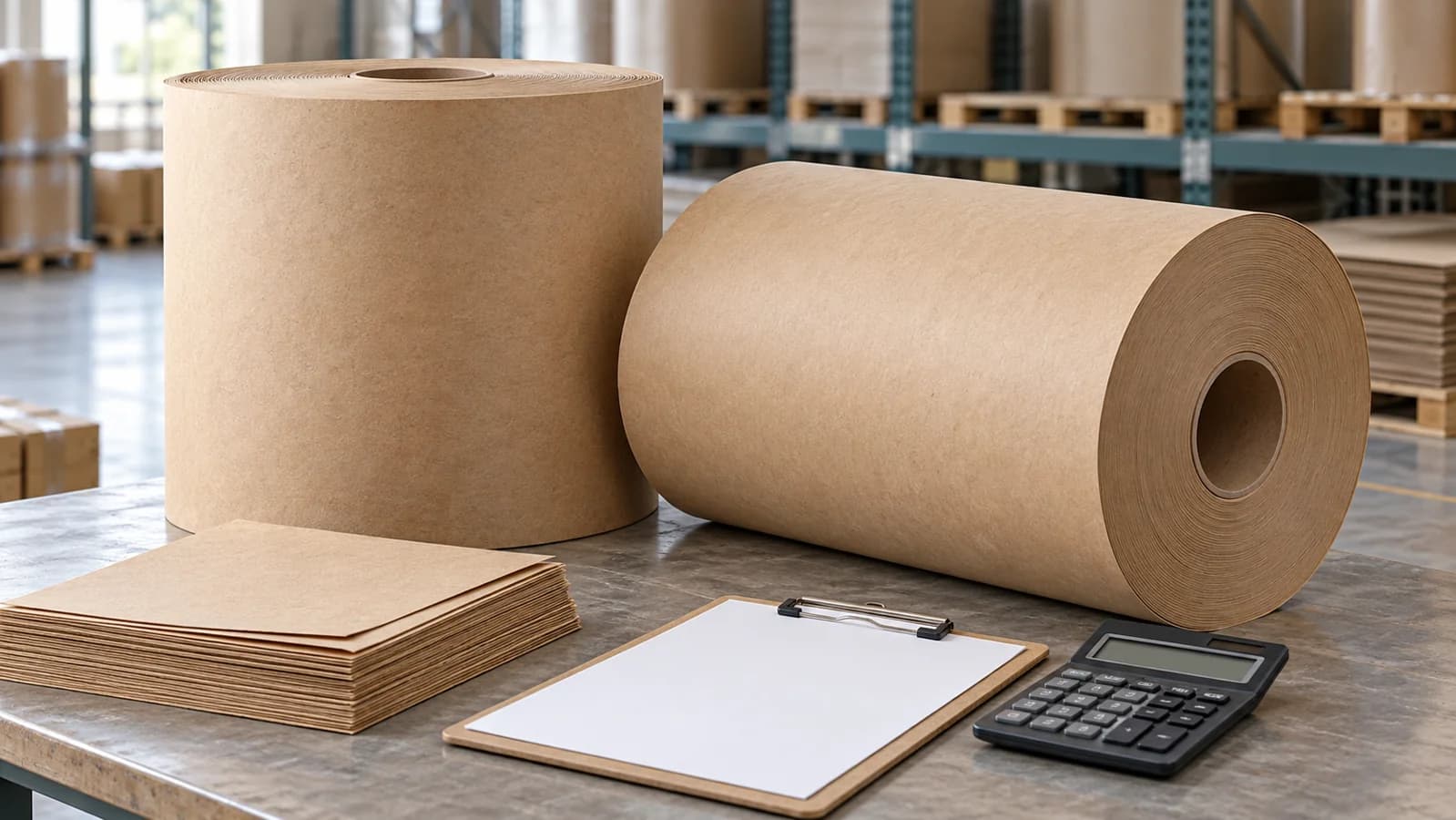
Compare the same purchase, not just the same unit price
For a brown kraft paper roll wholesale purchase, compare quotations using the same paper specification, net paper quantity and delivery scope. A lower price per tonne can cover fewer services, a different weight basis or a different delivery point. Build a like-for-like comparison before treating it as a saving.
Start with the required grade and application, then keep three records together: the material specification, the roll packing list and the commercial quotation. This guide focuses on cost scope for bulk paper rolls; our brown kraft paper product page is the starting point for a material enquiry.
A recent logistics signal, with a clear boundary
On 14 October 2026, the public Fastmarkets forest-products update highlighted higher trucking costs for US linerboard. That is a US transport observation for a particular market, not a quotation for Chinese kraft paper, an ocean-freight rate or evidence of a YOUNGSUN price increase.
Our procurement takeaway is narrower: when a logistics component changes, ask which part of your own quotation it affects. Obtain a dated, route-specific proposal rather than applying a market headline to every paper order. This article publishes no current paper price or freight benchmark.
First make the paper and quantity basis identical
Before comparing freight, confirm that both suppliers are quoting the same colour, grade reference, grammage, roll width and intended use. Add any agreed quality criteria and document requirements. Comparing different constructions can hide a material difference inside an apparent price difference.
Then identify the billing denominator:
- Is the quoted tonne a metric tonne of net paper, or does the stated weight include packaging and cores?
- Are roll count and estimated net weight both supplied?
- Is quantity expressed by mass, area or length, and which basis governs the invoice?
- How will actual delivered quantity and agreed tolerances be recorded?
Ask for a packing-list example and a written weight definition. Gross shipment weight helps with transport planning, but it should not silently replace net paper weight in a purchasing comparison. Do not estimate saleable paper merely from the outside size of a roll.
Put a delivery point beside the trade term
ICC's official Incoterms® 2020 overview explains that the rules allocate costs, risks and responsibilities between buyer and seller. Its background guidance is useful when clarifying the scope of an international paper quotation; it is not a new rule announced this week.
Record the agreed rule, its edition and the named place or port in the offer. Avoid comparing a factory-level proposal and a freight-inclusive proposal as though their unit prices covered identical obligations. Ask the supplier and forwarder to identify which charges are included and which remain for the buyer.
The exact allocation should follow the selected rule and the agreed contract. This guide does not recommend one term for every shipment, set YOUNGSUN's default terms or replace the parties' contractual review. Payment conditions and quotation validity should also be recorded explicitly.
Build an inclusion list without counting freight twice
Use a short comparison sheet with a separate line for each relevant item. Mark it included, separately quoted, excluded or not yet confirmed. An empty cell is an unresolved cost, not zero.
Useful lines include paper, export packing, inland transport, terminal handling, main carriage, insurance where relevant, destination handling, import clearance, applicable duties or taxes, and final delivery. Ask the relevant service provider to confirm the items for the actual route. Tax and import treatment require destination-specific confirmation; this article supplies no tariff classification or tax rate.
If a charge is already included in the supplier's offer, do not add it again from a forwarder's estimate. If a charge is excluded, obtain its basis and validity rather than guessing an allowance. Keep the supplier's and forwarder's original offers beside your comparison so the totals remain traceable.
Check packing and load assumptions before accepting a total
Roll dimensions, core details, protective wrapping and pallet or other packing arrangements affect the physical shipment. Request the proposed packing list and load plan before treating an estimated freight total as final. Confirm who approves the packing and handles the relevant transport booking.
Do not assume that every container carries the same net paper tonnage. The proposed roll sizes and packing configuration need an actual loading assessment. No container payload, standard packing option or shipping schedule is promised here.
For a buyer comparing two options, keep the approved material requirement constant while reviewing the packing and transport proposal. A cheaper total should not depend on unapproved changes to grade, roll format or protective packing.
Compare cost per agreed net tonne delivered to the same point
Once the cost scope is confirmed, a practical comparison is the total of the included quotation and the verified additional costs needed to reach the same agreed destination point, divided by the agreed net paper tonnes. Use one currency and a stated conversion date if currency conversion is necessary; do not mix undated estimates with firm offers.
Keep uncertain charges visible and show how they could change the result. A comparison with an unresolved destination cost is provisional. A longer quotation-validity period is not a guaranteed delivery date, and an estimated shipment date is not a confirmed arrival.
Before issuing the purchase order, check that the selected offer still matches the current material specification, quantity, cost scope and validity. Retain the approved versions so later changes can be assessed against the same basis.
Send an enquiry that can be quoted clearly
Share the kraft grade or sample reference, grammage, width, intended use, requested net quantity, packing needs, delivery point and preferred commercial basis. Ask for inclusions, exclusions, weight definitions and quote validity in the response.
Explore packaging paper and board, our application information, or send the purchase requirements. Availability and commercial terms must be confirmed for the proposed order. The useful outcome is a quotation that can be compared and checked, rather than a number stripped of its conditions.
Frequently asked questions
Can I compare kraft paper offers only by price per tonne?
Only after aligning the paper specification, net-weight definition and delivery scope. Otherwise the prices may cover different quantities or services.
Does gross shipment weight equal net paper weight?
Not necessarily. Ask how cores and protective packing are treated, and use the agreed net paper quantity for the purchasing comparison.
Does a US trucking-cost headline establish my import freight cost?
No. Obtain a dated proposal for your actual route and cost scope. A regional market report is not a supplier or freight quotation.