
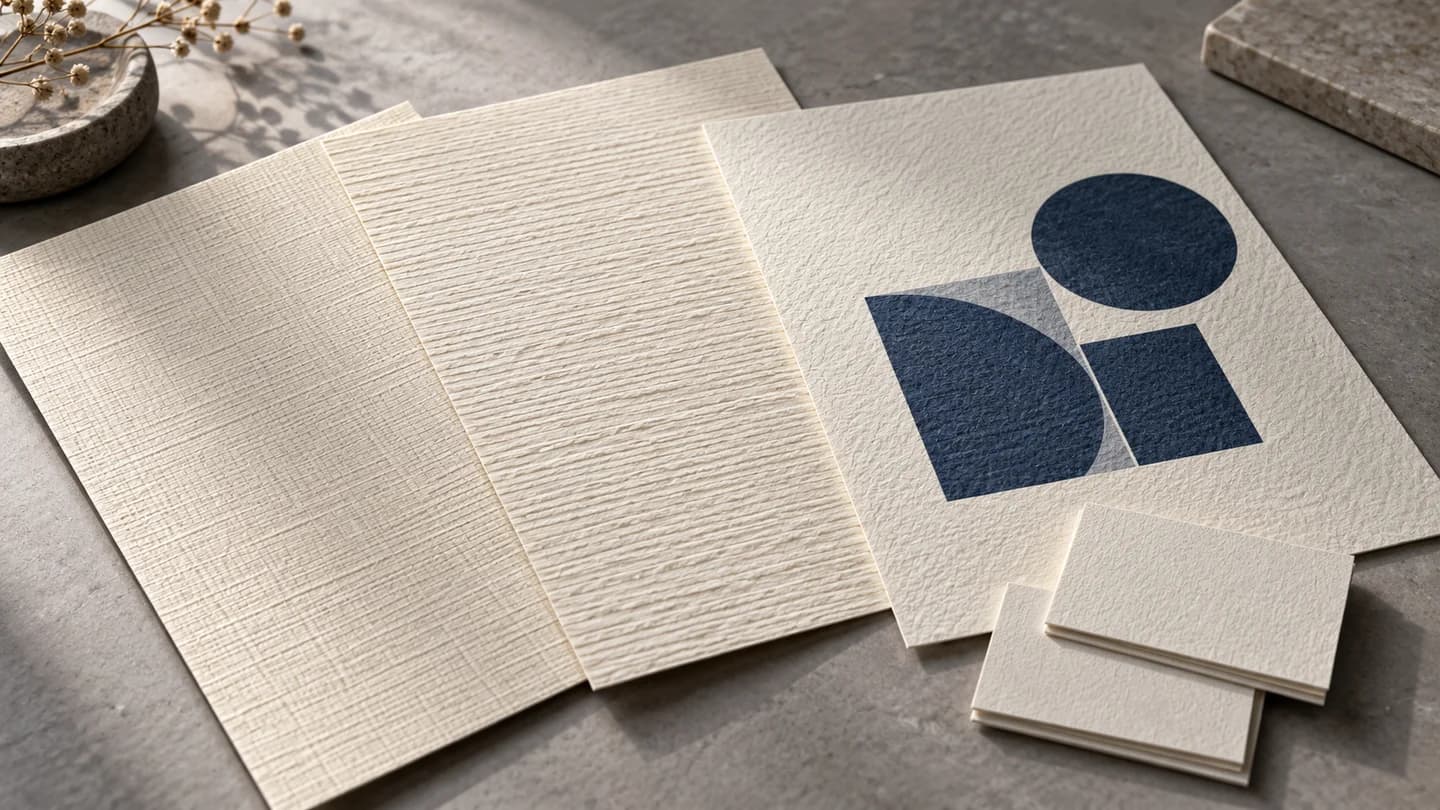
A textured sheet can give a printed piece a distinctive feel. Before placing a production order, however, buyers need to answer a more practical question: can this exact paper produce the intended result on the printer that will run the job?
Start with the machine, not the texture name
“Digital printing” does not identify a single process. Mohawk distinguishes dry toner, liquid toner and inkjet in its digital-paper guidance. A suitability claim should therefore name the process and equipment rather than rely on a broad digital label. Mohawk digital papers
Ask the printer to confirm the machine model, media limits and settings before shortlisting a grade. Record grammage, caliper, sheet size and the intended printing side separately. Do not assume that a decorative-paper catalogue establishes machine compatibility.
Compare the printed result as well as the tactile result
Xerox's Nuvera guidance explains that excessive surface roughness can affect solids, detail and dry-ink adhesion on that system. This is equipment-specific guidance, not a rule that every textured stock fails on every press. Xerox Nuvera Paper Guide
Build the sample artwork around the actual job: a large brand-colour area, fine text, a photograph if relevant, and the smallest details the customer must read. Compare candidate sheets against the same approved artwork. A pleasing blank swatch is only one part of approval.
Agree acceptance criteria before the trial
Our suggested buyer checklist is to inspect colour consistency, legibility, visible gaps, handling durability, feeding and front-to-back placement. These are proposed checks, not reported test results. Ask the print provider to specify a suitable test method and agree what counts as acceptable for the finished application.
Include finishing in the trial when the order involves folding, trimming or another conversion step. Keep an approved sample and record the paper reference, machine and settings used. If a candidate does not deliver the desired result, compare a different texture or revise the artwork with the printer rather than assume a heavier sheet will solve the problem.
What to include in a sample enquiry
Send the application, printer model and process, target texture, colour, grammage and caliper requirements, sheet format, quantity and destination. Include sample artwork and finishing requirements. Ask which properties are documented for the specific grade and which need a trial.
Explore creative printing papers and the texture library, review printing and packaging applications, then share your project. These collections provide starting points for selection; this article does not certify their suitability for a particular digital machine.
FAQ
Does the same GSM mean the same printing performance?
No compatibility should be inferred from GSM alone. Compare the exact grade and machine requirements, then approve a representative print sample.
Can a sample photograph replace a physical test?
Use photographs to shortlist appearance. Approve the physical material and a print trial for the production decision.