
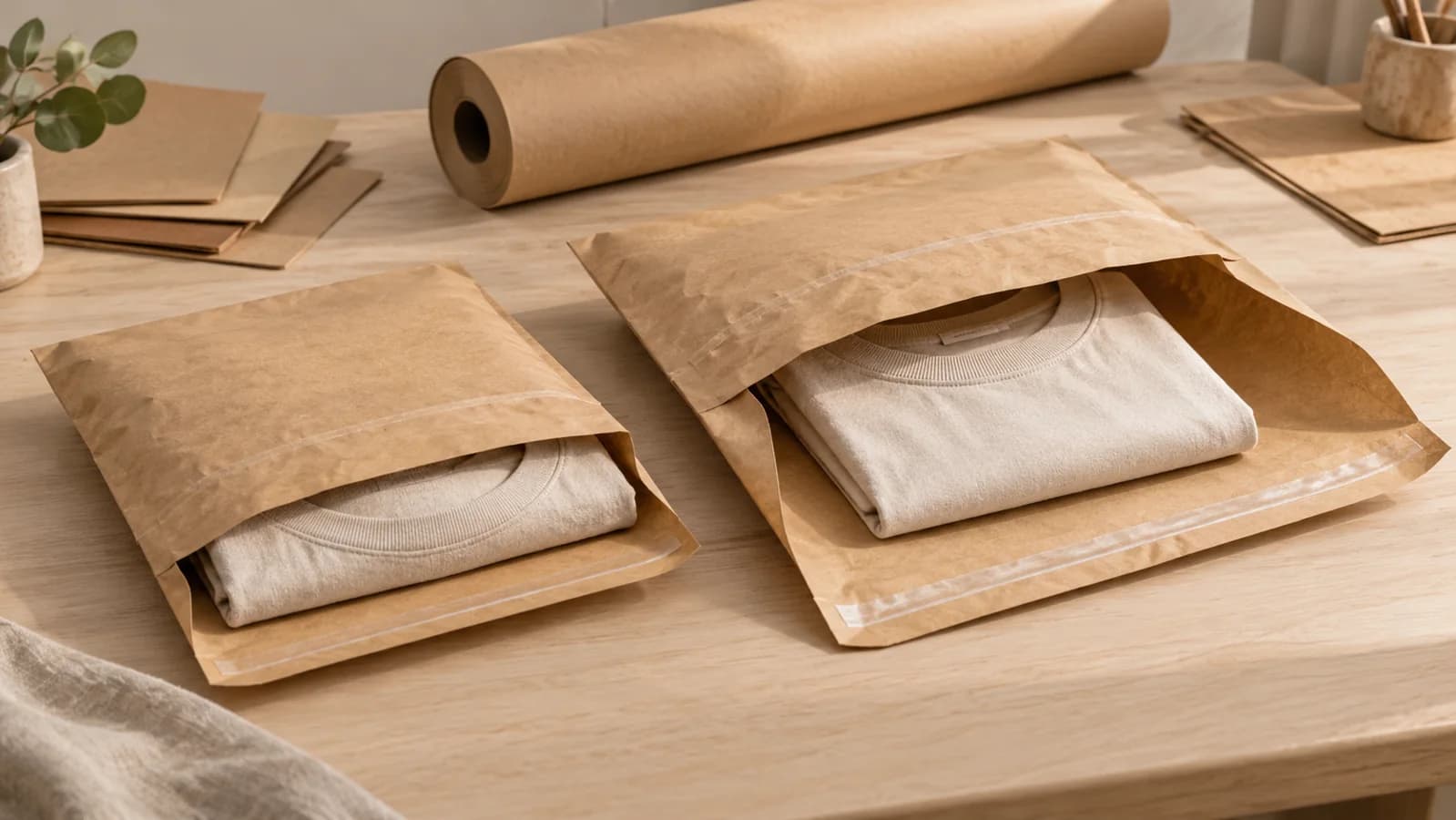
Paper mailer rightsizing starts with the order, not the paper price
A smaller paper mailer is a useful candidate only when the packed order remains protected, the closure works reliably and the pack moves through your fulfilment process. Approve a defined product-and-mailer combination. Buying less paper per shipment does not, by itself, establish a lower cost per successful delivery.
The practical buying question is which orders can move into a smaller format, which need additional protection and which should stay in another packaging format. The following approval framework is a procurement recommendation, not a laboratory test procedure or a promise of savings.
What the latest automation launch changes for buyers
On October 12, 2026, Packaging Europe reported Pregis's InfinX rightsizing launch. The system makes order-sized mailers using specified machinable versions of Pregis materials. This is a reminder that automated rightsizing depends on a material-and-machine combination; it is not evidence that any brown kraft sheet can run on that equipment.
For a paper buyer, the resulting opportunity is to ask for an agreed operating envelope before comparing quotations. Separate the material supplier's grade proposal, the converter's finished-mailer construction and the equipment provider's compatibility confirmation. A launch announcement cannot substitute for those approvals.
Build a representative order basket
Choose orders that expose different packing conditions rather than approving the mailer around one convenient sample. Your basket might include a single folded garment, a mixed order and an order with a rigid retail carton. These are illustrative cases, not approved applications for a particular grade.
Record the packed dimensions and weight of each case, the position of harder edges, the space needed to insert the goods and the protection supplied by any inner pack. Include the actual product presentation the customer receives. An empty mailer is not a representative shipment.
Then divide the basket into three provisional groups: candidates for the smaller mailer, cases needing a different construction or protective component, and cases remaining in a box or other format. Keep the exception group visible in the business case: an attractive demonstration can hide expensive repacking if it excludes awkward orders.
Confirm the material and conversion boundaries
Compare candidate brown kraft paper and white kraft paper by the exact available grade and intended converting process. These pages are starting points for a material enquiry, not a declaration that their grades suit every automated mailer.
Ask the converter and equipment provider to review:
- Paper identity: grade reference, grammage, caliper, surface and any coating or lamination, with the relevant documents.
- Pack construction: finished dimensions, joints, closing method and any protective layer.
- Feed format: roll or sheet requirements and tolerances confirmed for the actual process.
- Operating conditions: the agreed machine settings, packing method and observed failures during a representative trial.
- Change control: which material, closure, product or process changes trigger a fresh review.
Do not infer sealing behaviour from paper colour or grammage. A paper sample, adhesive system and completed mailer answer different approval questions. Keep their identities together in the trial record.
Measure the complete shipment in a controlled pilot
ISTA's public design and testing guidance stresses understanding the distribution environment when selecting tests and using representative products and packages. That guidance is background, not a newly issued October rule. Have a qualified laboratory help select a current protocol for the intended route; this article does not prescribe a test sequence or certify any package.
For your buyer's pilot, define what counts as acceptable before comparing the incumbent format with the proposed mailer. Record the same order basket for both:
- Finished packed size and packaging material used per order.
- Closure quality and packing exceptions under the agreed process.
- Product condition and package condition after the agreed evaluation.
- Packing time, repacking and additional protective materials.
- Actual carrier quotation or invoice treatment for the shipment and destination.
These are suggested comparison fields, not standardised pass thresholds. Keep lab testing and commercial pilot records distinct. If a failure appears, record the affected order and investigate its construction rather than averaging it away inside a headline saving.
Compare cost per acceptable shipment
A smaller pack may change material use, but freight savings depend on the actual carrier, service, dimensions and charging rules. Obtain the applicable quotation. Do not assume a material reduction creates the same percentage reduction in freight or carbon footprint.
For a decision, compare packaging spend, conversion and packing work, required inserts, freight and observed damage or repacking costs using your own records. Show the exception rate alongside the cost comparison. If only a subset of orders passes, approve that subset and retain the current format for the rest until another solution is validated.
Turn the pilot into a useful paper enquiry
Send the material supplier the intended mailer construction, order basket, feed format, grade documents needed, destination and approval criteria. State which compatibility questions the converter or machine supplier still needs to answer. Request a sample plan for the specific proposal rather than an unspecified “e-commerce paper”.
Explore our packaging materials and application guidance, or contact the sourcing team with your requirements. Availability, commercial conditions and suitability need confirmation for the proposed grade and order.
Frequently asked questions
Does a smaller paper mailer always reduce shipping cost?
No. Carrier charges depend on the actual service, dimensions, weight and destination. Compare quotations or invoices for the packed order before claiming savings.
Can any kraft paper run on an automated mailer system?
Do not assume compatibility. Confirm the exact grade, construction, feed format and operating requirements with the converter and equipment provider.
Should every order move into the same paper mailer?
Approve a representative order basket and retain exceptions. Products needing another protection level or format should stay outside the approved group until evaluated.