
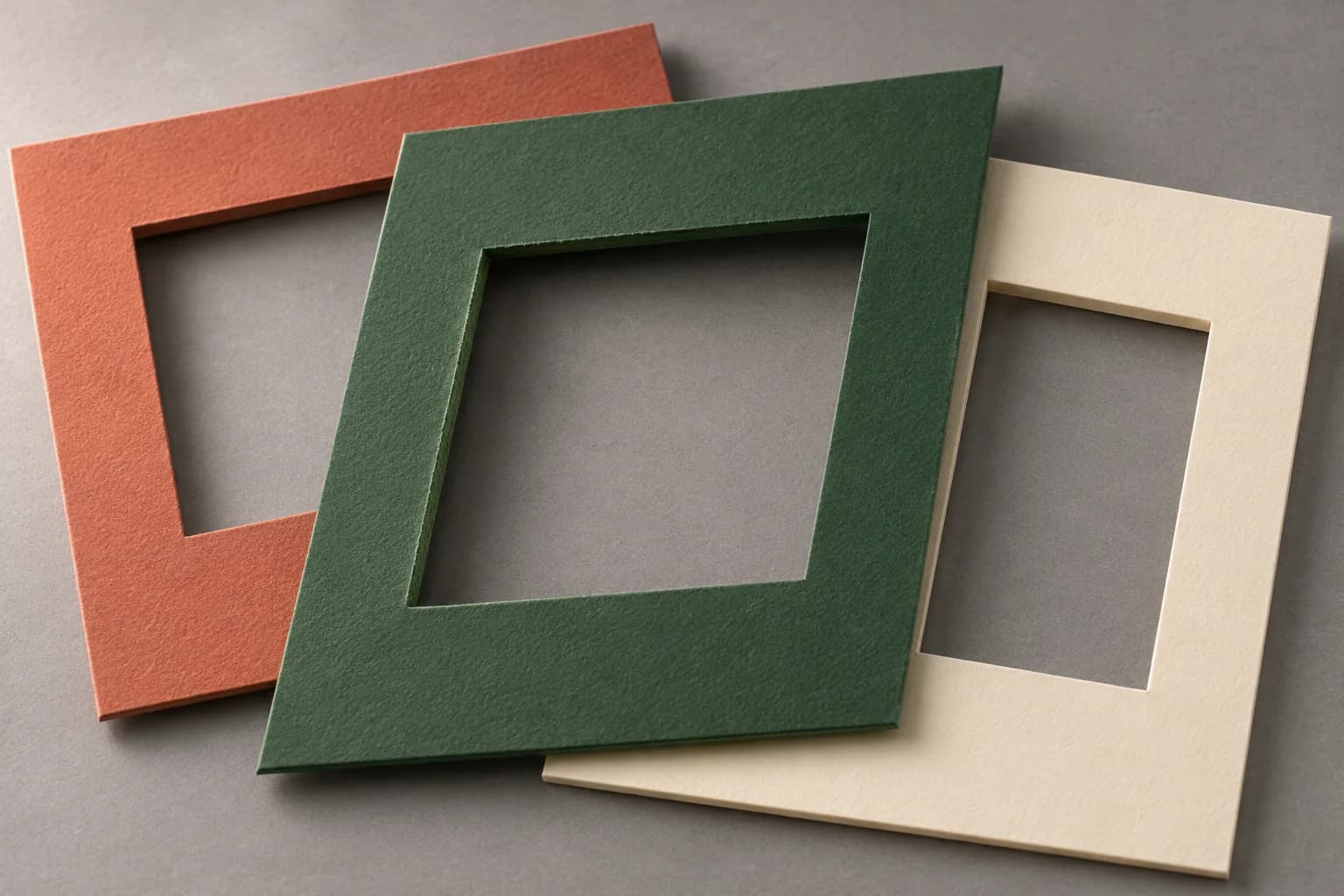
A colour swatch shows the face of a sheet. A die-cut window introduces another visible surface: the cut edge inside the opening. Before buying color card paper for a windowed card, sleeve or presentation component, approve a converted sample with the intended window, surface finish and backing. Keep the appearance of that opening separate from approval of the sheet's face colour.
This is a guide to a visible cut-out in coloured card. It does not assess food-contact packaging, prescribe a window film or promise a particular cutting tolerance. If the design includes a film or another bonded layer, that construction needs its own review.
Define what the customer will actually see
Start with the finished component, not an isolated colour chip. Is the window viewed from the front only, from both faces, or with a contrasting insert behind it? Does the inner edge remain exposed after assembly? Ask the designer to identify the opening, the printed area and any other layers in one clearly versioned drawing.
For artwork preparation, PrintNinja's die-cutting guide asks for separately identifiable vector cut shapes and printed artwork. It also requires the shape to be reviewed during quoting. That supports an early discussion with the converter. Its published distances and manufacturing allowances concern its own products; they are not acceptance limits for your coloured-card component.
Send the converter the actual proposed shape, including any narrow sections and internal corners. Ask which features need revision before a sample is made. Do not treat a decorative mock-up as confirmation that the production process can reproduce every detail.
Approve the opening as well as the face colour
| Reference | What it helps you approve | What still needs a finished sample |
|---|---|---|
| Material swatch | Selected shade and surface | Appearance at the exposed cut edge |
| Artwork and cutline | Intended shape and print relationship | Actual opening after conversion |
| Converted loose panel | Front, reverse and inner-edge appearance | View with the intended backing or product |
| Assembled reference | Visible result in the proposed construction | Any separate use-performance requirement |
As a buyer's visual checklist, compare the inside edge around the entire opening, including corners. Record visible loose fibres, rough areas, incomplete removal of waste or unwanted marks if they affect the intended appearance. Review both faces rather than assuming the reverse matches the front. These are proposed acceptance questions, not a standardized test or a statement that a grade has passed one.
The ePrint die-cut file guide notes that unlaminated stock can look rough in some cut areas and recommends a finish for its own work. This is a useful reason to review the real surface treatment with the converter. It does not mean that every coloured card needs lamination, or that a finish will guarantee a clean edge on your design.
Compare the window with its intended background
Place the sample over the insert, product or background used in the design review. Check it at the agreed viewing distance and under consistent lighting. A narrow edge that is unobtrusive against a similar shade may be more noticeable beside a contrasting backing; treat that as a design decision to review on the actual construction.
If the window must reveal specific text or a product detail, compare the assembled sample with the approved drawing. Ask the converter to agree the relevant position criteria. Avoid importing another printer's tolerance or assuming that matching the overall panel size proves the opening is acceptable.
Specify the coloured card independently
YOUNGSUN's Color Card Paper range is intended for branding, tags, cards and creative packaging. The product information includes cutting and die-cutting among possible converting routes, with grade-specific finishing approval. Select the shade and surface using a physical reference, then discuss the proposed converting route for that exact grade.
Request the applicable specification, sheet format and a material sample. Separately ask the converter for a representative windowed component. Do not assume all grades, grammages or smooth and embossed finishes will give the same converted result. A face-colour match alone does not approve the whole component.
Keep the grade, swatch reference, finish, drawing revision and approved converted sample together. Record the backing used during review and which edge conditions are acceptable. When the shape, finish or material changes, identify what needs fresh approval instead of silently extending the old reference.
For material selection, send YOUNGSUN your requirements, including the proposed sheet format, shade and downstream cut-out. The packaging-board range provides related material options. Confirm finished-component production and acceptance with the responsible converter.
Buyer questions
Can a colour swatch approve a die-cut window edge?
A swatch helps select the sheet's colour and surface. Use a converted sample to review the opening, exposed edge and reverse appearance.
Must every windowed coloured card be laminated?
No universal finish follows from the presence of a window. Discuss the intended surface, appearance and process with the converter and approve the actual construction.
Should the backing be included in the sample review?
Include it when it affects the visible result or what the opening must reveal. Keep that assembled reference with the drawing and material specification.