
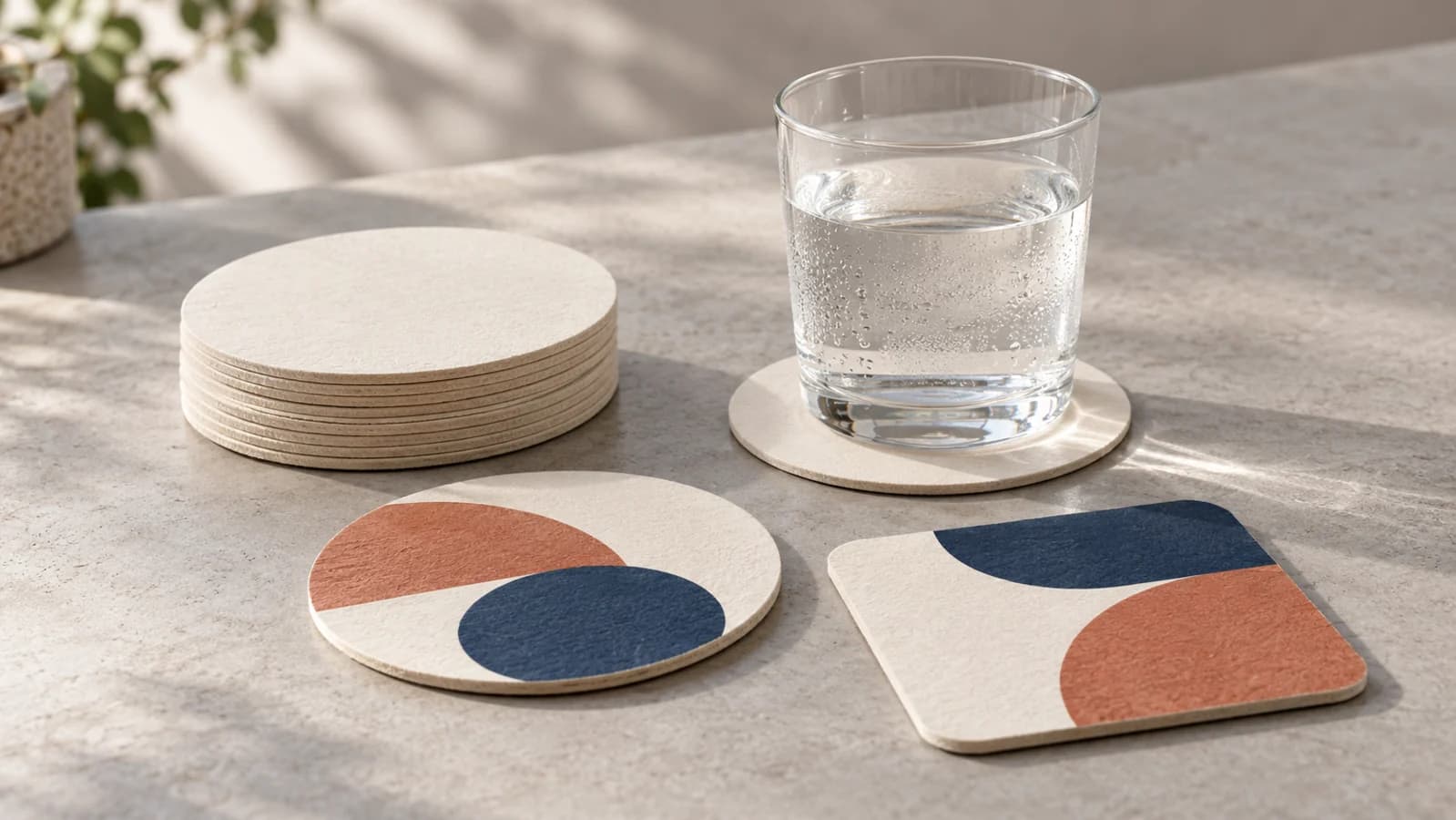
Approve the board in the form the customer will use
Coaster board should be evaluated as a printed, cut beverage coaster as well as a blank sheet. A blank sample helps you compare the material; a finished sample lets you assess the combination of board, artwork, ink and any surface treatment. For a bulk order, keep those two approvals linked to the same grade reference.
This is an evergreen procurement guide for printers, converters and paper importers. It focuses on a specific question: how do you approve an absorbent paperboard coaster after printing? It does not set a universal absorption target or claim a test result for a YOUNGSUN grade.
Separate the material specification from the print specification
Start with the absorbent board product page. Request the proposed grade, grammage, thickness, sheet or reel dimensions, printable faces and intended converting route. Confirm the actual options with the supplier rather than applying one stock specification to every job.
Then describe the finished coaster: shape, dimensions, number of printed faces, artwork coverage, ink system and any varnish, coating or lamination. Ask the printer to identify changes made between the approved sample and production.
A useful approval record has three parts:
- Material reference: the agreed board and the physical blank sample.
- Production reference: the artwork revision, printing process and finishing construction.
- Use reference: the drinkware, moisture exposure and handling conditions the buyer wants to assess.
Keeping these records separate makes a later change easier to investigate. A matching thickness alone does not establish that the finished construction is unchanged.
Use a print proof on the proposed material
KATZ's public coaster resources distinguish uncoated-board artwork guidance from proofing on its own board. This is a useful industry example of checking design on the actual substrate, not a YOUNGSUN production specification. KATZ coaster printing and proofing resources
For your own order, ask for a representative proof using the intended process. Include the areas that matter to the customer: a large colour field, fine detail and both printed faces when applicable. Compare the result with an agreed physical reference under consistent viewing conditions. Treat a screen image as a selection aid rather than a final colour approval.
If a protective finish is proposed, request it on the trial sample too. Do not approve a blank board and assume that an untested finished version will behave identically. Record the finish and printed coverage as part of the construction being purchased.
Match the absorption question to the test method
Ask what a reported absorption number actually measures before comparing suppliers. ISO 535:2023 describes the Cobb method but excludes some highly absorbent papers from its scope. A test name therefore needs a scope check for the selected material. ISO's public scope for ISO 535:2023
Request the method and edition, sample condition, tested face, exposure period, units and whether the specimen was blank or printed. Have the supplier or laboratory confirm that the method suits the material. This guide does not prescribe a substitute laboratory method or a pass value.
Keep a practical use trial separate from a standardized test. For example, the buyer and converter can agree a comparison using the intended glass and a controlled moisture exposure. Use the same conditions for each candidate and record observations such as moisture transfer to the surface below, curling, ink transfer and how easily the coaster can be handled after use. These are suggested comparison points, not a claim that a particular grade passes.
Release an order with a defined change rule
Before confirming bulk supply, retain a blank sample and a finished sample together. Identify which sample governs material appearance, which governs print colour and what acceptance criteria the parties have agreed. Include the specification revision in the order.
If the board grade, printer, ink, artwork coverage or surface finish changes, ask whether another finished-sample review is needed. This avoids treating every change as harmless simply because the coaster has the same shape.
For a material enquiry, review our packaging board range and application overview. Send the project requirements, including the finished coaster design, supply format and proposed printing process. Grade availability, dimensions and acceptance criteria should be confirmed for the actual order.
Frequently asked questions
Can a blank coaster board sample approve the finished printed job?
It establishes a material reference. Review a representative printed and cut sample as well, including any proposed finish, before approving the finished construction.
Is one Cobb number enough to compare every coaster board?
No. Confirm method scope, edition, conditions, units and specimen construction with the supplier or laboratory before comparing results.
What should trigger another sample review?
Ask for a review when the board grade, printing process, ink, artwork coverage or finish changes. Agree the change rule and acceptance criteria in the order.