
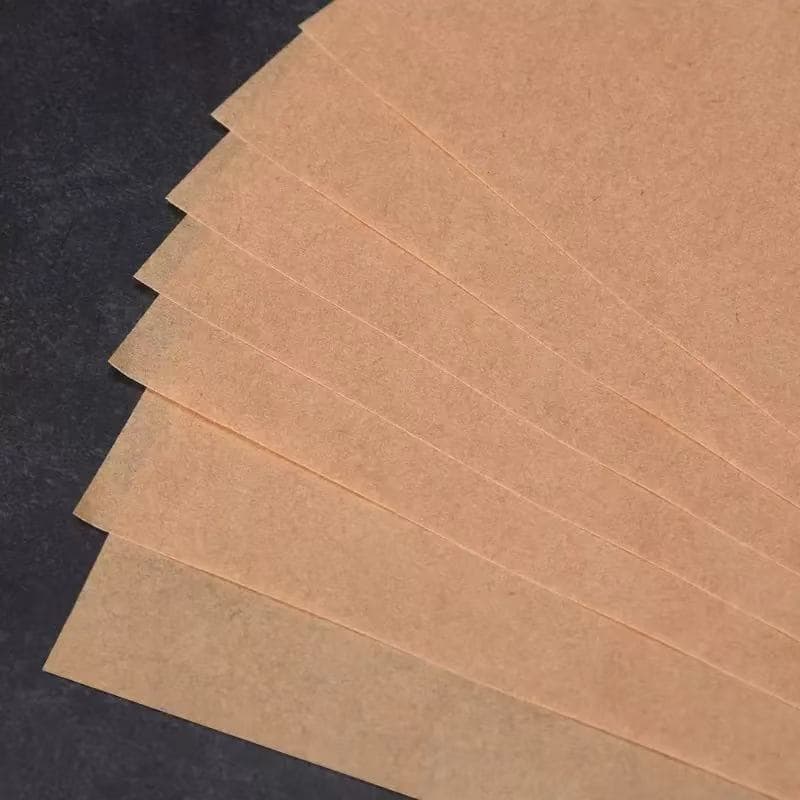
Introduction
Greaseproof paper, baking parchment and wax paper are often grouped together because they can all be used around food. They are not interchangeable. Their barrier mechanism, heat response, non-stick behaviour, printability and regulatory documentation can differ significantly.
The practical answer is:
- Choose natural greaseproof paper for wraps, liners and food-service applications where oil resistance and a paper feel are required.
- Choose baking parchment or silicone-treated baking paper when the verified end use requires heat stability and release performance in an oven or industrial baking process.
- Choose wax paper for an application that specifically benefits from a wax barrier and stays within the supplier's approved temperature and food-contact conditions. Do not assume it is oven-safe.
- Consider PE-coated or other barrier paper when moisture resistance, liquid holdout or heat sealing is the primary requirement—but evaluate recycling route, coating construction and intended-use compliance separately.
The grade name alone is not a compliance certificate. Food type, contact time, temperature, single- or repeat-use conditions, additives, inks, coatings and adhesives all affect suitability. The U.S. FDA explains that food-contact substances must be authorised for their intended use and that manufacturers are responsible for following applicable specifications and limitations. Buyers should request documentation for the exact supplied construction, not a generic statement about “food-grade paper.”
What is natural greaseproof paper?
Natural greaseproof paper develops oil resistance largely through refining and densifying cellulose fibres to reduce pathways through the sheet. Specific products may include other treatments, so the supplier must describe the actual construction.
Nordic Paper, for example, describes natural greaseproof paper as mechanically processed cellulose with no added fluorochemicals and identifies food packaging, baking papers and baking-cup papers as different application groups. This demonstrates an important principle: “greaseproof” is a family of grades, not one universal product.
Natural greaseproof paper can be used for items such as bakery wraps, burger and sandwich liners, confectionery interleaving, snack bags and food-service sheets, subject to grade approval. Required properties may include grease resistance, wet strength, printability, foldability, release, breathability or limited moisture resistance.
What is parchment or baking paper?
In commercial food-paper language, baking parchment usually refers to a heat-resistant, grease-resistant sheet designed for baking and release. Many baking papers are silicone treated to improve non-stick performance. Exact construction, usable side or sides, temperature limit and contact time are product-specific.
Do not source baking paper by colour or hand feel. Ask for the declared temperature/time conditions, food-contact documentation, release-performance data and whether the paper is suitable for conventional oven, microwave, freezer-to-oven or industrial baking use. A claim for one condition does not automatically cover all of them.
What is wax paper?
Wax paper is paper treated with wax to provide a moisture and grease barrier. It can be useful for cold or ambient wrapping, interleaving, confectionery and preparation tasks. The wax type, coating weight, food-contact status and temperature limit must be confirmed.
Because wax can soften or transfer under heat, buyers should not treat wax paper as a substitute for baking parchment unless the supplier specifically approves the intended oven conditions. Application instructions on a retail product also should not be used as technical approval for a different industrial grade.
Where does PE-coated paper fit?
Polyethylene-coated paper combines a fibre base with one or more polymer layers. Depending on the construction, it may improve liquid holdout, water-vapour performance and heat sealability. It is used in applications such as cupstock, takeaway packaging and coated wrapping papers.
PE coating is not simply “stronger greaseproofing.” It changes converting, sealing, repulping/recycling considerations and compliance documentation. Buyers should define whether coating is on one side or two, target coating weight, dyne or print treatment where relevant, seal requirements, roll orientation and the food-contact side.
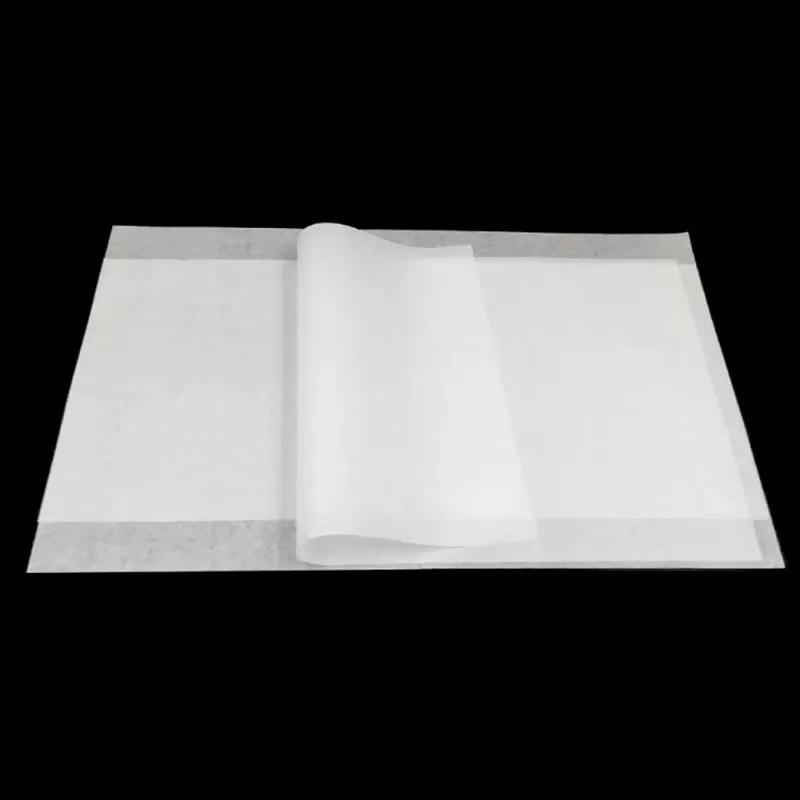
Quick decision table
| Buyer question | Natural greaseproof | Baking parchment / baking paper | Wax paper | PE-coated paper |
|---|---|---|---|---|
| Primary role | Oil/grease resistance with paper feel | Heat-resistant release and grease resistance | Wax-based moisture/grease barrier | Moisture/liquid barrier and possible heat sealing |
| Typical uses | wraps, liners, bags, interleaving | tray liners, industrial baking, cooking | cold/ambient wraps, interleaving | cups, tubs, takeaway packs, coated wraps |
| Oven use | only if exact grade is approved | often designed for baking; verify limits | generally not a default oven choice | depends entirely on construction; verify |
| Non-stick | grade-specific | commonly engineered for release | grade-specific | not automatically non-stick |
| Heat sealing | not inherent | not inherent | possible only in specific constructions | commonly possible with suitable coating |
| Key procurement proof | grease resistance + intended-use compliance | heat/release data + compliance | wax identity/coating + temperature limit | coating construction + seal/barrier/compliance data |
Start with the food and use conditions
The most useful food-paper RFQ begins with the actual contact scenario.
Food type
Describe whether the food is dry, aqueous, fatty, acidic, alcoholic, frozen or a combination. “Bakery product” is not enough: a dry biscuit and a butter-rich hot pastry create different demands.
Contact temperature
State temperatures during filling, cooking, reheating, storage and serving. If the paper moves from freezer to oven or microwave, write the full cycle. Avoid vague phrases such as “high temperature.”
Contact time
Seconds during service, hours in a display case and months in frozen storage are different exposure conditions. State the maximum expected contact time, not only the average.
Direct or indirect contact
Identify which surface touches food and whether ink, adhesive, coating or recycled fibre is separated by a functional barrier. For printed wraps, provide the print layout and confirm migration/set-off controls with the converter.
Single use or repeated use
Most wraps are single-use, while some preparation products may be marketed for repeated cycles. The compliance and performance evidence must match the intended claim.
The FDA's chemistry guidance similarly emphasises food type, maximum time and temperature, and whether a food-contact article is single- or repeat-use. This is why a supplier cannot responsibly approve an application from GSM alone.
Barrier properties and tests to discuss
Grease resistance
Ask which method the supplier uses and what the reported value means. Kit testing or other grease-resistance methods can support comparisons, but a laboratory value should be related to real food, temperature and contact time. Run an application test using the intended oil or food simulant where appropriate.
Water and moisture behaviour
Oil resistance does not guarantee liquid-water resistance or water-vapour barrier. A burger wrap, frozen-food liner and paper cup need different performance. Ask for Cobb, vapour transmission or other relevant data only when it matches the application and construction.
Heat stability
For baking, verify maximum temperature and time, dimensional stability, scorch/discolouration behaviour and whether coating or release treatment remains suitable. Test in the actual process because oven type, airflow, food composition and direct contact can affect performance.
Release and non-stick performance
Release is not identical to grease resistance. Test the intended dough, confectionery or food surface after the full baking/cooling cycle. A paper that blocks oil may still stick to a sugar-rich or protein-rich product.
Wet strength and handling
Hot, moist or frozen foods can weaken paper. Evaluate tearing, puncture and fold integrity after exposure. For bags or wraps, test seams, folds and printed areas—not only a flat centre sample.
Print and odour neutrality
Food packaging should be assessed for unwanted odour or taste transfer under intended storage conditions. Inks, varnishes and adhesives must be selected and controlled for the construction. Print rub and set-off should be checked before material is stacked or rolled.
Planning a paper or board order?
Send us your application, format and target specification.
Send your requirementsFood-contact compliance: what buyers should request
The legal framework depends on the destination market and intended use. In the United States, the FDA notes that the regulatory status of the finished material depends on each component and its applicable authorisation. The agency also explains that a buyer may request a letter of guaranty for a particular intended food-contact use. See the FDA's guidance on determining the regulatory status of food-contact material components.
For European supply chains, requirements can involve framework legislation, good manufacturing practice and national recommendations or guidance for paper and board. The CEPI Food Contact Guidelines describe a value-chain approach to compliance for paper and board. Buyers should obtain advice for the destination country rather than treating one certificate as worldwide approval.
Request, as applicable:
- declaration or letter covering the exact grade and intended conditions of use;
- identity and compliance basis for coatings, additives, inks and adhesives;
- test reports from a competent laboratory, with sample identity and method;
- traceability to production lot;
- statements on substances of concern required by the customer or market;
- GMP and quality-system information;
- migration or extractives evidence where required;
- fibre-origin or chain-of-custody documentation if specified.
Do not accept a logo-only “FDA approved” certificate without checking what product, manufacturer, regulation and conditions it actually covers. FDA authorisations can be substance-, manufacturer- and use-specific.
PFAS questions should be handled precisely
PFAS has become a significant procurement question for grease-resistant food packaging. The FDA states that grease-proofing substances containing certain PFAS are no longer being sold by manufacturers into the U.S. market and that related food-contact notifications were determined no longer effective following abandonment of those uses. See the FDA's current page on authorised uses of PFAS in food-contact applications.
A “PFAS-free” request still needs a defined supplier declaration or analytical scope. Ask what substances or fluorine measurement the statement covers, which test method is used, the detection limit and whether the declaration applies to the base paper, coating, ink and converted article. Avoid implying that one screening result proves every possible chemical absence.
Factory trial and shipment-inspection workflow
1. Approve the paper construction
Confirm base fibre, treatment/coating, GSM, thickness, colour, finish, food-contact side and roll/sheet format. Match the sample code to the proposed production grade.
2. Run the actual conversion
Print, slit, sheet, fold, form, coat or seal the material using production settings. Record roll direction, corona treatment where relevant, seal temperature window, adhesive and ink system.
3. Test with the real application
Use the intended food or a technically justified simulant under maximum time and temperature. Check grease staining, leakage, sticking, tearing, odour, print rub and seal integrity. Retain controls and document the conditions.
4. Review compliance documents
Make sure the grade name, manufacturer, lot or formulation and intended-use conditions match the ordered material. A test report for a different coating weight or supplier may not support the actual shipment.
5. Conduct pre-shipment inspection
Check quantity, roll width or sheet size, GSM, roll diameter, core, joints/splices where applicable, labels, wrapping and pallet condition. Inspect roll edges for crushing and moisture damage. Confirm that the food-contact side and unwind direction are clearly identified for the converter.
Food-paper RFQ checklist
- Product: natural greaseproof / baking parchment / wax paper / PE-coated paper.
- Food and direct-contact side.
- Maximum temperature and contact time.
- Storage: ambient, chilled or frozen.
- Single or repeat use.
- GSM, thickness and colour.
- Grease, moisture, release, wet-strength or seal requirement.
- Printing process, colours and ink system.
- Roll width/diameter/core/unwind or sheet size/grain direction.
- Conversion process and line speed.
- Quantity and forecast.
- Destination market and required compliance documents.
- Packing, pallet and container requirements.
- Sample or trial-roll requirement.
Common sourcing mistakes
- Using “food grade” as the entire specification. Compliance depends on the actual construction and intended use.
- Assuming greaseproof means oven-safe. Heat and release claims require grade-specific evidence.
- Treating wax paper as baking parchment. Wax behaviour under heat must be considered.
- Ignoring food type, time and temperature. These conditions are central to performance and regulatory assessment.
- Testing only the base paper. Printed and converted components can introduce inks, adhesives, coatings and set-off risks.
- Ordering rolls without unwind direction. The correct food-contact or seal side may reach the machine incorrectly.
- Accepting unrelated certificates. Product identity, manufacturer and conditions of use must match.
FAQ
Is greaseproof paper the same as parchment paper?
Not always. Parchment or baking paper is generally engineered for heat and release, while greaseproof paper is a broader family focused on oil resistance. Terminology varies by market, so approve the exact construction and end-use conditions.
Can greaseproof paper go in the oven?
Only when the specific grade is approved for the intended oven temperature and contact time. Do not infer oven suitability from grease resistance alone.
Is wax paper safe for baking?
Wax paper should not be treated as a baking-paper substitute unless its supplier explicitly approves the exact heat conditions. Wax can soften or transfer under heat.
What paper is best for burgers and fried food?
A natural greaseproof wrap or an engineered barrier paper may be appropriate. Selection depends on oil load, serving temperature, holding time, print, breathability and disposal route. Test with the actual food.
Does greaseproof paper contain PFAS?
Some historical grease-proofing chemistries used PFAS, while natural greaseproof and alternative barrier technologies may not. Request a current declaration for the exact grade and clarify the scope and test method behind any “PFAS-free” claim.
What does “FDA compliant” mean for food paper?
It should refer to a documented compliance basis for the specific components and intended conditions of use—not a general approval of every product from a factory. Ask for the applicable regulation, notification or other basis and any limitations.
Should I buy sheets or rolls?
Use rolls for high-volume printing, wrapping, bag making, cup forming or sheeting lines when equipment and widths are defined. Sheets can suit lower-volume wraps, interleaving and manual or sheet-fed converting. Compare yield, line speed, joints, core and pallet logistics.
Conclusion
Greaseproof, parchment and wax papers solve different barrier and processing problems. The safest and most economical choice comes from defining food type, temperature, time, release, moisture, printing and conversion before selecting a grade. Compliance documents and laboratory results must match the exact product and intended use, and production trials should include the finished printed or converted construction.
CTA — Discuss Your Food-Paper Application: Send YoungSun the food type, contact temperature/time, GSM, roll or sheet format, printing/converting process, quantity and destination market. We can help structure the information needed for grade matching, samples and quotation.